
MAKE! Participants Reflect on Creativity, Community and Growth
Alicia Zapata, a second-year MAKE! participant and kindergarten through eighth grade art teacher at Waters Elementary School in Chicago; Kelly Wendel, an eighth-year participant and art teacher at Nicolet High School in Glendale, Wis.; and Gail Kowsky, a second-year participant and sixth- and seventh-grade art teacher in New Brighton, Minn., reflected on what they gained from this year’s program.
For Zapata, MAKE! provides the time and space to nurture ideas that continue to develop throughout the school year.
“I always say this program is planting seeds for my art practice and then for the rest of the year, I help make them grow,” she said. “Being able to be here and having the time and space to work and to have dialogue with other artists about my work, their work, the world and teaching is so valuable.”
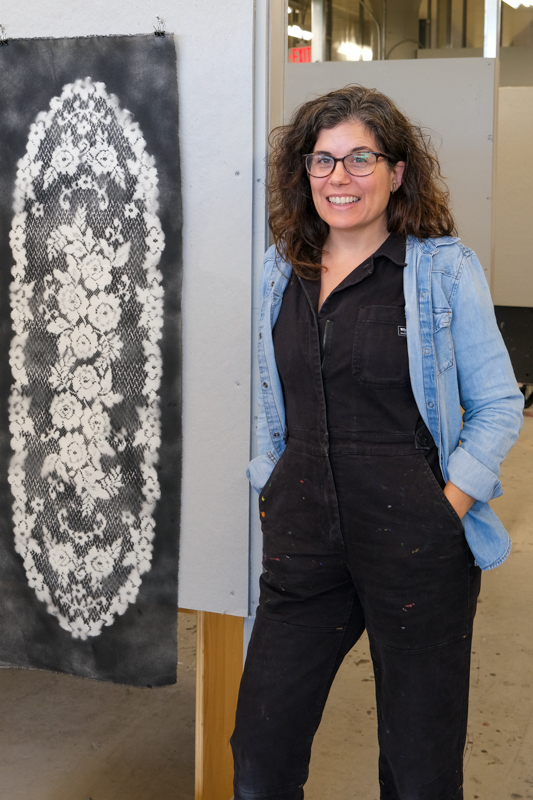
Alicia Zapata
Wendel said one of the program’s greatest strengths is the creative freedom it offers.
“One of the biggest things I get out of this program is the freedom to come in either with a plan or without a plan and to still create on my own terms,” she said. “I can watch demos, talk with other art educators and professors, and then decide how I want to spend my studio time.”
Kowsky said the connections she builds with fellow educators are invaluable.
“A lot of times we’re by ourselves [as educators],” she said. “It’s nice to gather in a space and talk about trends, what we’re seeing in kids, what projects are working and what new materials people have found.”
She also appreciates how her personal artwork is supported and taken seriously.
“Just having that extra level of input and connection and, you know, being taken seriously,” she said, “is really meaningful.”
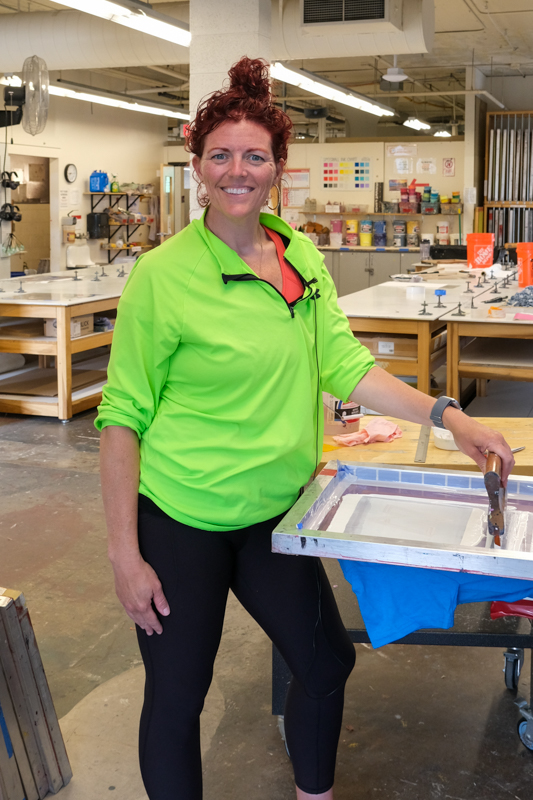
Kelly Wendel
Participants also reflected on the ideas and inspiration they’re most excited to take back to their classrooms and creative practice.
Zapata said she is leaving with a substantial body of work she can continue developing throughout the year while bringing new ideas and techniques back to her students.
“The conversations with other educators plant so many seeds,” she said. “You’re talking about your work, then your classroom, then back to your work again.”
Wendel hopes to model creative risk-taking for her students.
“I want my students to know that just because there are rules or expectations, it doesn’t mean you should stop showing your voice. One big thing is finding things that you’re passionate about,” she said. “It doesn’t matter if other people don’t like it or understand it. That’s OK. It’s for you.”
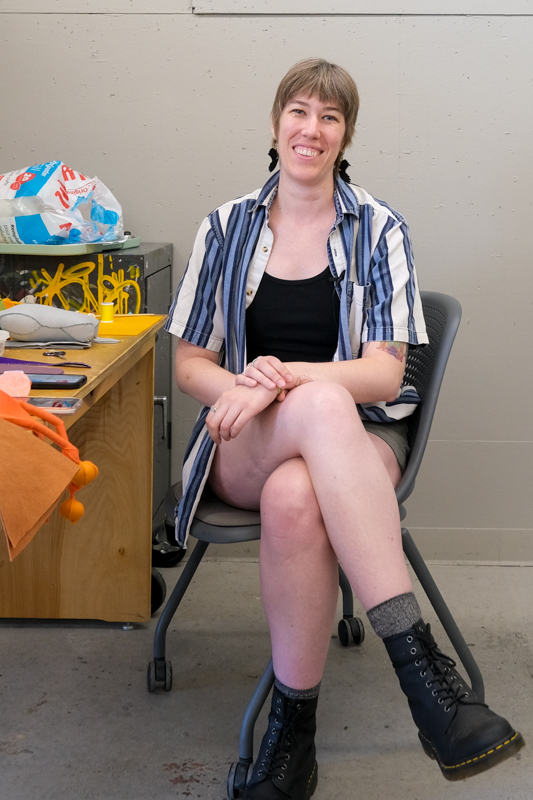
Gail Kowsky
For Kowsky, MAKE! is a reminder of both the importance of creative time and the challenges students face every day.
“It puts us in a student mindset again,” she said. “It reminds us what it feels like to struggle, to be uncomfortable and to learn. That’s where learning happens — in the discomfort.”
Learn more about MIAD’s MAKE! educator program.
Alicia Zapata, a second-year MAKE! participant and kindergarten through eighth grade art teacher at Waters Elementary School in Chicago; Kelly Wendel, an eighth-year participant and art teacher at Nicolet High School in Glendale, Wis.; and Gail Kowsky, a second-year participant and sixth- and seventh-grade art teacher in New Brighton, Minn., reflected on what they gained from this year’s program.
For Zapata, MAKE! provides the time and space to nurture ideas that continue to develop throughout the school year.
“I always say this program is planting seeds for my art practice and then for the rest of the year, I help make them grow,” she said. “Being able to be here and having the time and space to work and to have dialogue with other artists about my work, their work, the world and teaching is so valuable.”
Wendel said one of the program’s greatest strengths is the creative freedom it offers.
“One of the biggest things I get out of this program is the freedom to come in either with a plan or without a plan and to still create on my own terms,” she said. “I can watch demos, talk with other art educators and professors, and then decide how I want to spend my studio time.”
Kowsky said the connections she builds with fellow educators are invaluable.
“A lot of times we’re by ourselves [as educators],” she said. “It’s nice to gather in a space and talk about trends, what we’re seeing in kids, what projects are working and what new materials people have found.”
She also appreciates how her personal artwork is supported and taken seriously.
“Just having that extra level of input and connection and, you know, being taken seriously,” she said, “is really meaningful.”
Alicia Zapata
Kelly Wendel
Gail Kowsky
Participants also reflected on the ideas and inspiration they’re most excited to take back to their classrooms and creative practice.
Zapata said she is leaving with a substantial body of work she can continue developing throughout the year while bringing new ideas and techniques back to her students.
“The conversations with other educators plant so many seeds,” she said. “You’re talking about your work, then your classroom, then back to your work again.”
Wendel hopes to model creative risk-taking for her students.
“I want my students to know that just because there are rules or expectations, it doesn’t mean you should stop showing your voice. One big thing is finding things that you’re passionate about,” she said. “It doesn’t matter if other people don’t like it or understand it. That’s OK. It’s for you.”
For Kowsky, MAKE! is a reminder of both the importance of creative time and the challenges students face every day.
“It puts us in a student mindset again,” she said. “It reminds us what it feels like to struggle, to be uncomfortable and to learn. That’s where learning happens — in the discomfort.”
Learn more about MIAD’s MAKE! educator program.
News
Independent Inquiry Program students explore AI through research and creative practice
As emerging technologies continue to reshape creative industries, MIAD’s Independent Inquiry Program (IIP) gives students the opportunity to investigate their impact firsthand. Through philanthropically funded support, the optional, by application program allows students to pursue self-directed research projects that explore how new technologies can influence art, design and education.
MIAD Alum Kelly Alexander Wendorf Brings Stories of Travel to Life Through Paper Cutting
For Kelly Alexander Wendorf, paper cutting is more than an artistic medium. It's a way to explore memory, movement and human connection through intricately layered works of art. A MIAD alum who studied printmaking, Wendorf recently created a series of large-scale...
Behind In a State of IF: A Collaborative Curatorial Journey
“In a State of IF”, on view in MIAD’s Frederick Layton Gallery through November 21, is the result of a years-long collaboration between co-curators Maria Novotny and Katherine Gressel.
MIAD Alum Kyle Nesbitt Blends Storytelling, Design and Brewing
For MIAD alumnus Kyle Nesbitt ’09 (Industrial Design), creativity has never been limited to a single discipline. Through Nezbittar, a project nearly a decade in the making, he combines design, illustration, branding, photography and craft beer into a singular creative venture.
Moonlight Retreat Builds Connection
Since 2018, MIAD faculty member Naomi Shersty has been creating space for artists and nonartists alike to step away from the demands of everyday life and reconnect through creativity, community and nature.